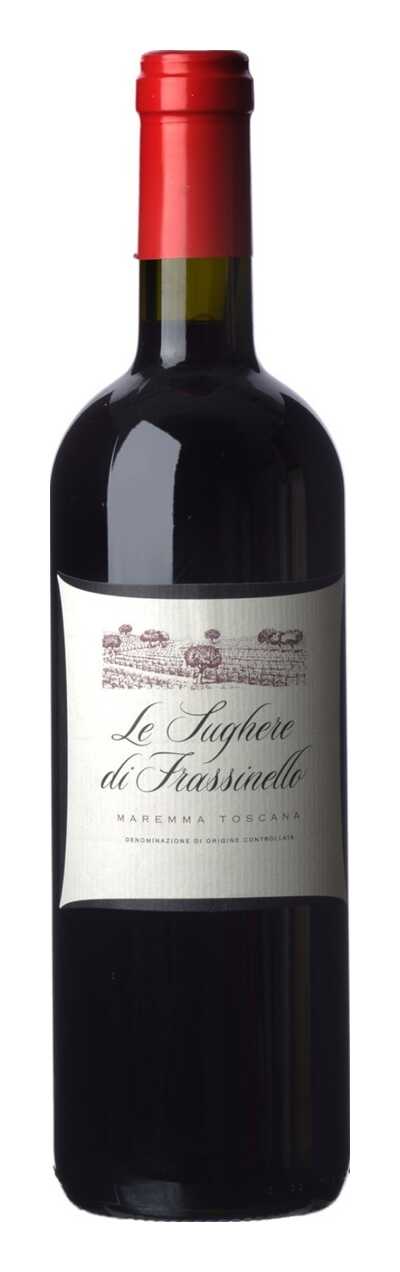
Maremma Toscana LE SUGHERE DI FRASSINELLO DOC Rocca di Frassinello
| Punteggio sommelier | 92/100 | 2026 |
| Cantina | Rocca di Frassinello |
| Denominazione | Maremma Toscana Doc |
| Annata | 2022 |
| Uvaggio | 50% Sangiovese, 25% Cabernet Sauvignon, 25% Merlot |
| Gradazione | 14,00% |
| Cl | 75cl |
| Solfiti | Contiene Solfiti |
| Sede Cantina | Giuncarico (GR) - Loc. Poggio la Guardia |
| Bottle size | Standard bottle |
| Combination | Fillet with green pepper, Cannelloni, Chicken nuggets, Lamb, Cold cuts and salami, Risotto, Scallops with mushrooms |
| Region | Tuscany (Italy) |
| Style | Medium-bodied and fragrant |
| Wine list | Maremma Toscana |
| Dichiarazione Nutrizionale, Ingredienti e Raccolta differenziata | Visualizza le informazioni nutrizionali |
Le Sughere di Frassinello is the second label of the Rocca di Frassinello winery and represents a blend of Sangiovese, Merlot and Cabernet Sauvignon, combining Tuscan tradition and the international imprint of the Italian-French project. The grapes come from vineyards located near Gavorrano, on clayey soils rich in skeleton, and are harvested by hand between late August and mid-September, depending on the variety. Winemaking takes place in temperature-controlled steel with malolactic fermentation carried out, followed by aging in French barriques, for approximately 18 months with a share of new wood, and a further rest in the bottle before marketing.
Characteristics of this Tuscan wine
From an organoleptic point of view it has an intense and luminous ruby red colour. On the nose it is broad and fruity, with evident notes of ripe red fruits that intertwine with more complex nuances of sweet spices, licorice and light toasted notes given by the refinement in wood. In the mouth it is a wine of good structure, soft and enveloping, with round tannins and well integrated. The sip is balanced, supported by a good freshness that lengthens its persistence, closing with a long and harmonious finish.
Recommended pairings with this red wine from Rocca di Frassinello
In pairings it is best expressed with rich and tasty dishes. It is ideal with structured first courses, meat sauces and important risottos, but also finds great balance with red meats, roasts and long-cooking preparations such as braised meats and game. It also pairs very well with aged cheeses, where its softness and tannic component harmonize with the saltiness of the food. The ideal service temperature is around 16-18 °C.
![Spumante Venezia DOC Brut WHITE GOLD [BOTTEGA]](https://data.negoziodelvino.it/imgprodotto/spumante-venezia-doc-brut-white-gold_17294_ico.jpg "Spumante Venezia DOC Brut WHITE GOLD [BOTTEGA]")
![Amarone della Valpolicella Classico CAPITEL DELLA CROSARA DOCG [GIACOMO MONTRESOR]](https://data.negoziodelvino.it/imgprodotto/amarone-della-valpolicella-classico-capitel-della-crosara-docg_17203_ico.jpg "Amarone della Valpolicella Classico CAPITEL DELLA CROSARA DOCG [GIACOMO MONTRESOR]")
![Montepulciano D'Abruzzo Colline Teramane COLLEVENTANO DOCG [Fattoria Giuseppe Savini]](https://data.negoziodelvino.it/imgprodotto/montepulciano-dabruzzo-colline-teramane-colleventano-docg_15371_ico.jpg "Montepulciano D'Abruzzo Colline Teramane COLLEVENTANO DOCG [Fattoria Giuseppe Savini]")
![ROSAMARO Brut Rosé Sparkling Wine [MASSERIA ALTEMURA]](https://data.negoziodelvino.it/imgprodotto/rosamaro-brut-rosé-sparkling-wine_16961_ico.jpg "ROSAMARO Brut Rosé Sparkling Wine [MASSERIA ALTEMURA]")
![Rosso Piceno Superiore DOP Organic Vegan Demeter [CIU CIU]](https://data.negoziodelvino.it/imgprodotto/rosso-piceno-superiore-dop-organic-vegan-demeter_16741_ico.jpg "Rosso Piceno Superiore DOP Organic Vegan Demeter [CIU CIU]")
![Brunello di Montalcino 2021 DOCG [Altesino]](https://data.negoziodelvino.it/imgprodotto/brunello-di-montalcino-2021-docg_11011_ico.jpg "Brunello di Montalcino 2021 DOCG [Altesino]")
![Classic Method Sparkling Wine Great Vintage Brut [COSTARIPA MATTIA VEZZOLA]](https://data.negoziodelvino.it/imgprodotto/classic-method-sparkling-wine-great-vintage-brut_17039_ico.jpg "Classic Method Sparkling Wine Great Vintage Brut [COSTARIPA MATTIA VEZZOLA]")
![Carignano del Sulcis Rosato TRE TORRI DOC [CANTINA DI SANTADI]](https://data.negoziodelvino.it/imgprodotto/carignano-del-sulcis-rosato-tre-torri-doc_16700_ico.jpg "Carignano del Sulcis Rosato TRE TORRI DOC [CANTINA DI SANTADI]")
![Montepulciano d'Abruzzo Colline Teramane P.121 DOCG [TENUTA ANTONINI]](https://data.negoziodelvino.it/imgprodotto/montepulciano-dabruzzo-colline-teramane-p-121-docg_17129_ico.jpg "Montepulciano d'Abruzzo Colline Teramane P.121 DOCG [TENUTA ANTONINI]")
![Franciacorta Vittorio Moretti Extra Brut DOCG 2018 In Wooden Box [Bellavista]](https://data.negoziodelvino.it/imgprodotto/franciacorta-vittorio-moretti-extra-brut-docg-2018-in-wooden-box_15294_ico.jpg "Franciacorta Vittorio Moretti Extra Brut DOCG 2018 In Wooden Box [Bellavista]")
![Sicilia VIAFRANCIA ROSATO DOC BIO [BAGLIO DI PIANETTO]](https://data.negoziodelvino.it/imgprodotto/sicilia-viafrancia-rosato-doc-bio_17450_ico.jpg "Sicilia VIAFRANCIA ROSATO DOC BIO [BAGLIO DI PIANETTO]")
![Brunello di Montalcino 2020 DOCG [La Torre]](https://data.negoziodelvino.it/imgprodotto/brunello-di-montalcino-2020-docg_5540_ico.jpg "Brunello di Montalcino 2020 DOCG [La Torre]")